



Quick Answer: A construction estimator figures out what a project will cost to build before anyone signs a contract. The estimator reads the plans and specifications, measures quantities in a takeoff, prices the materials and labor, and turns that number into a bid or proposal. On specialty trade jobs like drywall, ceilings, fireproofing, and painting, the estimator prices one trade in depth and often bids the same project to several general contractors.
What does a construction estimator do? In short, a construction estimator decides what a job will cost and what the company should bid to win it at a profit. The U.S. Bureau of Labor Statistics says cost estimators "collect and analyze data in order to assess the time, money, materials, and labor required" for a project.
That definition covers the basics, but it doesn't show what the work looks like on an actual bid. This guide follows a specialty trade estimator from the bid invite to the final proposal, then covers the core duties, the skills the job takes, and the tools estimators use every day.
What Is Construction Estimating?
Construction estimating is the process of predicting the cost of a construction project from its plans and specifications before the work starts. The estimate becomes the bid price, so it decides whether a contractor wins the job and whether the job makes money.
Specialty trade contractors employ more cost estimators than any other industry. According to the BLS Occupational Outlook Handbook for cost estimators, cost estimators held about 226,400 jobs in 2025, and specialty trade contractors employed 33% of them.
What Does an Estimator Do in Construction? A Bid From Start to Finish
An estimator in construction runs every bid from the first invite to the final number. Here is how a typical bid crosses a specialty trade estimator's desk.
1. Review the Bid Invite
Bid invites arrive from general contractors, often several for the same project. The estimator checks the bid date, the scope, and the project type, then decides whether the job is worth pursuing. No estimator can bid everything, so choosing the right jobs matters as much as pricing them.
2. Read the Plans and Specifications
The estimator downloads the drawings and the project manual and reads the sections for their trade. A drywall estimator reads the gypsum board and framing sections, the wall types, and the finish schedule. A fireproofing estimator reads the UL designs and the structural drawings. Every addendum gets the same review, because one changed detail can change the price.
3. Do the Takeoff
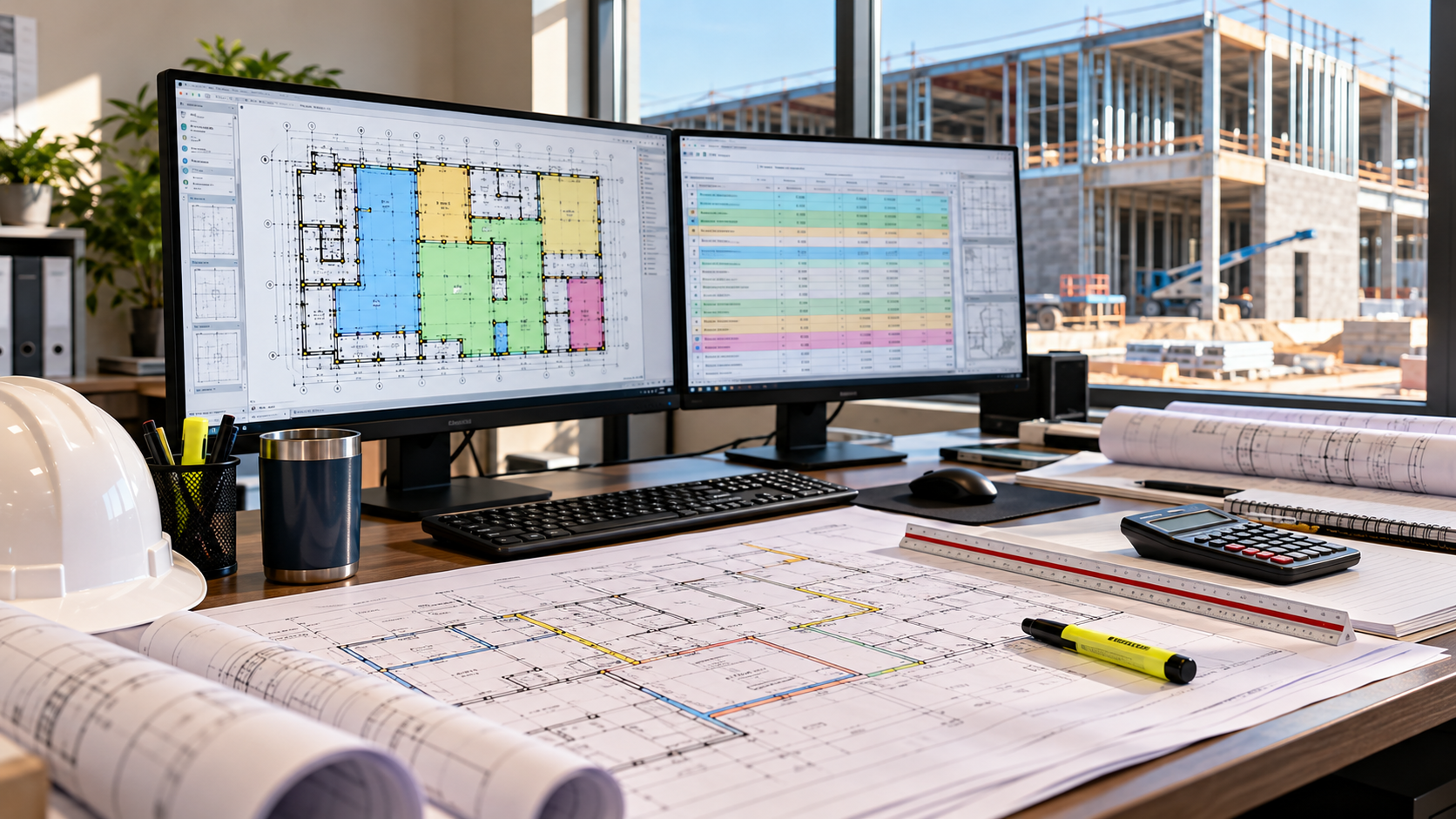
The takeoff measures every quantity the estimator needs to price, such as linear feet of wall, square feet of ceiling, or the steel members that need fireproofing. This step usually takes the most time on a bid. Our guide to how construction takeoff software works shows how software speeds up the measuring.
4. Price Materials and Labor
Next, the estimator turns quantities into dollars. That means applying material costs, waste, labor production rates, and crew costs, then adjusting for job conditions like height, access, and schedule. Each trade has its own math. A fireproofing estimator works out thickness from the W/D ratio of each steel member, while a painter works out gallons from surface area and coverage, as our guide on how to estimate commercial painting jobs shows.
5. Send Questions and Clarify the Scope
When the documents conflict or leave something unclear, the estimator sends questions to the general contractor before bid day. The estimator also writes down exactly what the price includes and excludes, so nobody argues about scope after the award.
6. Finalize the Number on Bid Day
On bid day, the estimator reviews the totals, applies overhead and profit, and checks the price against past jobs. Bid days come with hard deadlines, and our article on the stress construction estimators face covers what that pressure feels like.
7. Submit the Proposal
The estimator sends a written proposal with the price, the scope, the inclusions, and the exclusions. A clear proposal protects the company if it wins the job.
8. Hand the Job to the Field
When the company wins, the estimator often hands the estimate to the project manager or foreman, so the crew knows the quantities, the labor hours, and the budget behind the price. The BLS lists "Maintain records of estimated and actual costs" as a core duty, and that comparison makes the next bid more accurate.
Construction Estimator Job Description: Core Duties
What do construction estimators do day to day? A construction estimator job description usually lists the duties the BLS uses for all cost estimators. Here is each one, with what it looks like on a specialty trade job:
| BLS Duty | What It Looks Like on a Specialty Trade Bid |
|---|---|
| "Identify factors affecting costs, such as production time, materials, and labor" | Spotting high ceilings, Level 5 drywall finishes, or overtime requirements that raise labor costs |
| "Read blueprints and technical documents in order to prepare estimates" | Reading wall types, reflected ceiling plans, UL designs, and finish schedules |
| "Collaborate with engineers, architects, clients, and contractors" | Sending scope questions to the general contractor and working with suppliers on pricing |
| "Calculate, analyze, and adjust estimates" | Updating the takeoff and price after every addendum |
| "Recommend ways to cut costs" | Offering a value engineering option, such as a different board type or framing gauge where the spec allows it |
| "Work with sales teams to prepare estimates and bids for clients" | Building proposals and following up with general contractors after bid day |
| "Maintain records of estimated and actual costs" | Comparing bid labor hours to actual hours on finished jobs |
How Specialty Trade Estimators Differ From GC Estimators
A general contractor's estimator and a specialty trade estimator both price construction work, but they do different jobs:
- Scope: A GC estimator builds the full project price from many subcontractor bids plus the GC's own work. A specialty trade estimator prices one trade, such as drywall, acoustical ceilings, fireproofing, or painting, in full detail.
- Depth: A specialty trade estimator measures every wall, ceiling, or steel member and prices the labor for it. That depth decides whether the trade contractor makes money on the job.
- Volume: A subcontractor often bids the same project to several general contractors, so specialty trade estimators often juggle a high volume of bids with overlapping deadlines.
- Trade knowledge: A specialty trade estimator needs to know how the crew actually builds the work, from framing layout to spray thickness, because the labor price depends on it.
BuzzBID serves nine commercial specialty trades, from drywall and metal framing to fireproofing and painting. See the full list on BuzzBID's trades page.
Skills Every Construction Estimator Needs
The BLS names five important qualities for cost estimators. Here is why each one matters on a construction bid:
- Analytical skills: Estimators compare construction methods to find the most cost-effective way to build the work.
- Detail oriented: The BLS notes that "minor changes may greatly affect the overall expense," so a missed wall type or addendum can sink a bid.
- Math skills: Estimators calculate labor, material, and equipment costs on every bid.
- Time-management skills: Bid dates don't move, so estimators plan their week around several deadlines at once.
- Writing skills: Clear proposals and scope letters keep the company out of disputes.
Specialty trade estimators also need two skills the BLS list doesn't spell out: reading specifications closely and understanding how crews build their trade in the field.
What Tools Do Construction Estimators Use?
Construction estimators use takeoff software to measure the plans, estimating software or spreadsheets to price the work, and PDF tools to review drawings. Many estimators still move quantities from one program into a spreadsheet, which adds time and room for errors on every bid.
BuzzBID puts the takeoff and the estimate in one place for commercial specialty contractors:
- Takeoff: ClickONCE™ computer vision speeds up the measuring, up to 500% faster, estimator verified.
- Estimating: BuzzBID Advanced adds assembly-based estimating and labor production modifiers, so quantities turn into a priced bid without a spreadsheet.
- Proposals: The bid proposal generator builds the proposal from the same estimate.
- Trade tools: BuzzBID FireShield handles heated perimeter, flute fill, and UL Fire Test integration for fireproofing estimators.
The team behind On-Screen Takeoff and Quick Bid built BuzzBID, and BuzzBID Advanced won AWCI's 2025 Excellence in Construction Innovation Award. For ceiling estimators, our ranking of the best acoustical ceiling takeoff software shows how BuzzBID compares to other tools.
What Does a Construction Estimator Do? Common Questions
How do you become a construction estimator?
You usually become a construction estimator through a construction or engineering degree plus on-the-job training. The BLS says construction cost estimators "typically need a bachelor's degree in a related field, such as construction or engineering," and that most cost estimators receive on-the-job training. Many specialty trade estimators also bring field experience from the trade they now bid.
What is the difference between a takeoff and an estimate?
A takeoff measures the quantities on the plans, and an estimate puts a price on those quantities. The takeoff tells you how many square feet of wall or ceiling a job has. The estimate adds material, labor, overhead, and profit to reach the bid price.
Is a construction estimator the same as a project manager?
No, a construction estimator prices the work before the contract, and a project manager runs the job after the award. In smaller specialty trade companies, one person sometimes handles both roles, which makes a clean handoff from the estimate to the field even more important.
Do construction estimators work in the office or on job sites?
Construction estimators work mostly in the office. The BLS says cost estimators "work mostly in office settings," and some estimators visit construction sites during the course of their work, such as for a pre-bid job walk.
Give Your Estimators Time Back
So, what does a construction estimator do? They turn a set of plans into a price the company can win with and build for. The faster the takeoff and pricing go, the more jobs your estimators can bid. Compare BuzzBID's published plans or contact the BuzzBID team to see a takeoff and estimate built on your own plans.